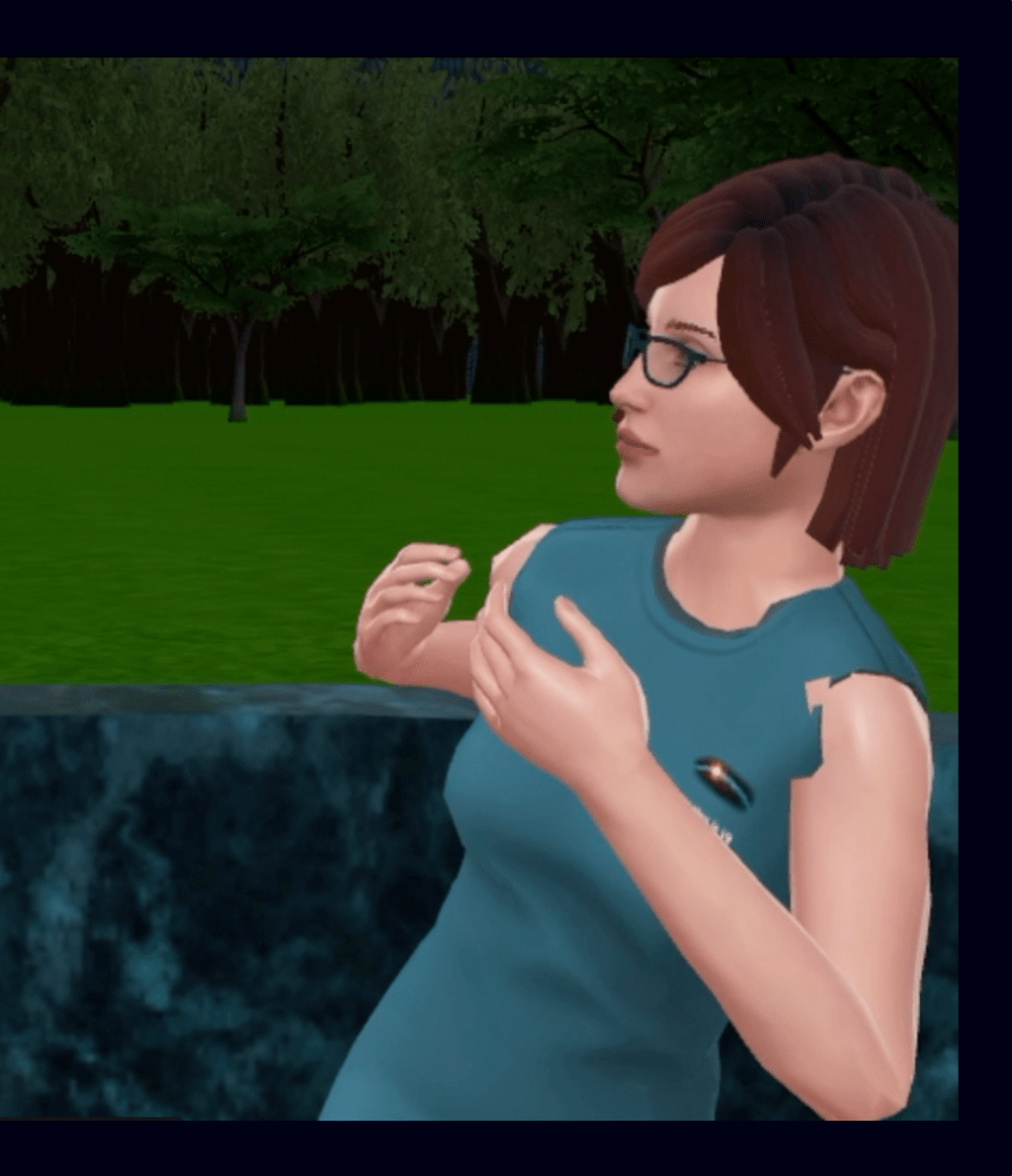
Authors: The Troll Project & Thawah
Most people might not expect the medium of virtual reality to be used for educational purposes. Many believe VR is solely meant for playing games. However, Lorelle VanFossen, an educator who’s been teaching in online spaces since the 1990s, sees it differently.
Meet Lorelle
Lorelle is the director of Educators in VR (EDVR). EDVR produces educational events and Lorelle works closely with teachers to help them use VR as an educational tool. Since 2016, she’s been dedicated to immersive, online education. Lorelle taught her very first online class in 1994, during the early days of the Internet.
Since then, she describes how much online education has grown and improved. These spaces allow educators to extend their reach and “break the geographical barrier,” as Lorelle describes. She shares her opinion on VR, stating that she believes it’s the next step for education, similar to how we moved from using blackboards to powerpoint. Speaking with Lorelle in Engage, a VR platform used by educators, it’s clear that she has plenty of experience with online spaces and knows her way around them.
Lorelle Defines Trolling
Lorelle states that she hates the word “trolling” as it puts people in a box. The way she sees it, there are disruptive people who are less coordinated, and then there are highly coordinated people who cause calculated harm. To Lorelle, a true troll is someone who plans and organizes their attacks, for example, using hacking methods. This is more difficult to deal with than someone who is simply disruptive and can be talked down. “Trolling means more than we can handle,” she says.
Experience With Trolls
Lorelle shares one experience with us where she was hosting an event and a troll effectively took over the space with a planned attack. Lorelle and her team were unfamiliar with that particular virtual template environment, and the troll, who seemed to know the space well, was able to press buttons and manipulate settings Lorelle didn’t even know existed. This kind of incident is arguably much harder to deal with than someone who is simply being loud and obnoxious.
Another trolling experience Lorelle had was during a different event. She was taking questions from the audience and one person started to ask a question, but things turned very dark, very quickly. The person proceeded to describe in detail how they wanted to harm Lorelle with a knife. Recalling this incident, Lorelle explains that she didn’t have much of an emotional reaction due to her extensive experience with trolls and online harassment. She remained calm and kicked the person from the event. As soon as she did that, all of a sudden the entire room filled up with heart emotes from the audience. The next person who asked a question to Lorelle, asked if she was okay. And for the next week, Lorelle says people checked in on her regularly to make sure she was feeling alright after the incident. From this experience, Lorelle learned a lot. She says that people care about your well-being and want to see you and your event succeed. The support of the audience and her community turned an unfortunate incident into a heartwarming one, displaying the strength of community support.
Changing VR Culture and Confronting Trolling
When asked how she would want to change VR culture, Lorelle says that she’d focus on new users, helping them understand the importance of community. However, she states that these issues are not exclusive to VR or gaming. “We need to get better at identifying mental health issues early on,” Lorelle says, emphasizing that the fix involves proper socialization. Lorelle shares her thoughts on the old idea of “stranger danger” that many of us grew up believing. She debunks this idea by relating it to abuse statistics which show that most abuse takes place between people who already know each other. Her point speaks to how we need to not fear strangers and treat them as foreign to us. Instead, we should remain open-minded and allow people into our community. Lorelle believes we should “meet people where they are” and make them feel welcome.
If a Troll Lives Under a Bridge…
We asked Lorelle the question, “If a troll lives under a bridge, what’s on the other side?” Lorelle’s answer was full of enthusiasm, care, and maybe a little tough love. “A hug, whether they want it or not!” she exclaims. Expanding on that answer, Lorelle explains that we as community leaders should try to embrace these folks in a way where they can understand that this is a safe place. If possible, we should try to have an open conversation about getting along properly with others and how to modify behavior. However, for the more extreme trolls, Lorelle believes we can show them the right path to get the help they need, but they have to walk it. We can’t carry everyone, she says, and we can’t fix someone until they’re ready to be fixed.
Lorelle’s optimistic and down-to-Earth attitude was palpable throughout the interview, and it’s clear she is highly invested in improving and expanding immersive online education. With community leaders like Lorelle, the future of VR educational spaces looks bright.
Here’s the full interview:
 The Troll Project